A painful lump beside the anus is not automatically a thrombosed haemorrhoid, especially when you also have bleeding, swelling or itching from haemorrhoids. By the end, you will know how to distinguish the likely causes, recognise same-day warning signs, prepare for an examination and choose care that can drain an abscess rather than merely mask its pain.
Key takeaways
- Fever, worsening pain, swelling or pus needs prompt medical assessment.
- Do not squeeze, puncture or self-drain a suspected perianal abscess.
- An established abscess usually needs examination and drainage, not haemorrhoid cream.
- Ask about imaging, anaesthesia and fistula follow-up when the abscess is complex or recurrent.
Is the painful lump an abscess, haemorrhoid or something else?
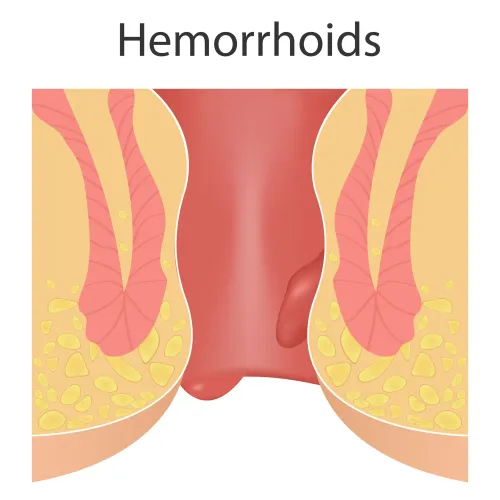
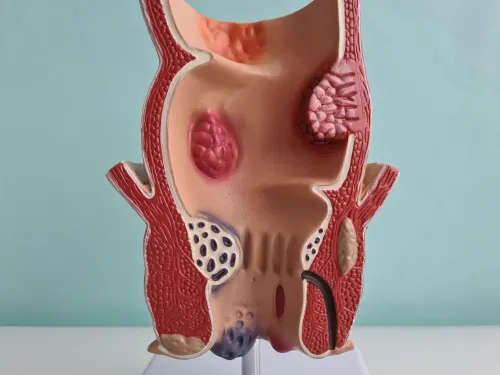
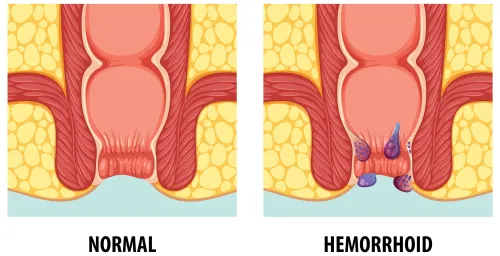
A perianal abscess is a localized pocket of pus beside the anus. Haemorrhoids are swollen vascular cushions inside or around the anal canal. They can occur together, but haemorrhoids do not usually cause an abscess; even people with hemorroids can develop a separate infection.
| Finding | More typical cause | What you may notice |
|---|---|---|
| Tender, warm, enlarging lump | Perianal abscess | Throbbing pain, increasing swelling and sometimes fever |
| Bluish, very painful lump at the anal edge | Thrombosed external haemorrhoid | Sudden severe pain and a firm blue-purple lump |
| Bright-red blood, itching or tissue prolapse | Haemorrhoids | Blood on paper or stool, itching, or tissue bulging during bowel movements |
| Sharp pain during and after bowel movements | Anal fissure | Cutting or burning pain that persists after passing stool |
| Ongoing discharge from a small opening | Anal fistula | Repeated pus or fluid drainage, recurrent swelling or a non-healing opening |
| Painful, red skin lump | Infected skin cyst | Local skin tenderness, warmth and possible pus |
Pain, swelling, bleeding and discharge overlap, so do not label a painful lump a haemorrhoid without examination. A perianal abscess doctor must assess the exact location, pain pattern and skin changes; the apparent size outside does not prove how deep the infection is.
Seek prompt care for rapidly worsening pain, fever, spreading redness, faintness or inability to pass urine.
Use this hemorrhoid abscess evaluation checklist before seeking care
Record the details before you seek care. A clear hemorrhoid abscess evaluation helps the clinician judge infection severity, urgency and possible fistula.
1. Note when the pain began and whether it is throbbing, constant or linked to passing stool. Record the exact swelling location, whether the lump is growing, and whether sitting or walking has become difficult.
2. Check for fever, chills, weakness, spreading redness, pus or foul-smelling discharge. Record constipation, difficulty passing stool, urinary urgency or inability to pass urine.
3. List risks that lower the threshold for same-day review: diabetes, chemotherapy, steroid treatment, immune suppression, advanced age, previous abscesses or fistulas, inflammatory bowel disease, and a recent anorectal procedure.
Seek same-day emergency assessment for rapidly worsening pain, fever or chills, spreading redness, faintness, confusion, marked weakness, severe pain out of proportion to the visible lump, or inability to pass urine. Do not wait for a routine appointment when these signs appear.
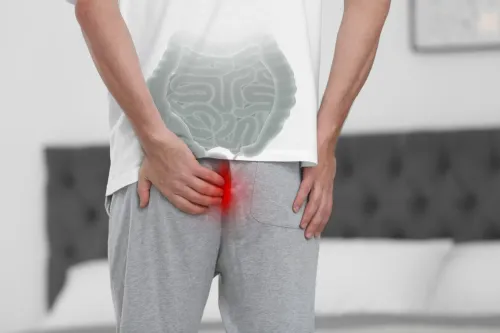
Pain can limit a digital rectal examination, so do not force an examination at home or delay care while trying to identify the lump yourself. Until assessed, avoid squeezing, cutting or puncturing it. A painful swelling with fever, increasing size or drainage needs examination even when you also have known haemorrhoids.
Why an established abscess needs examination and drainage
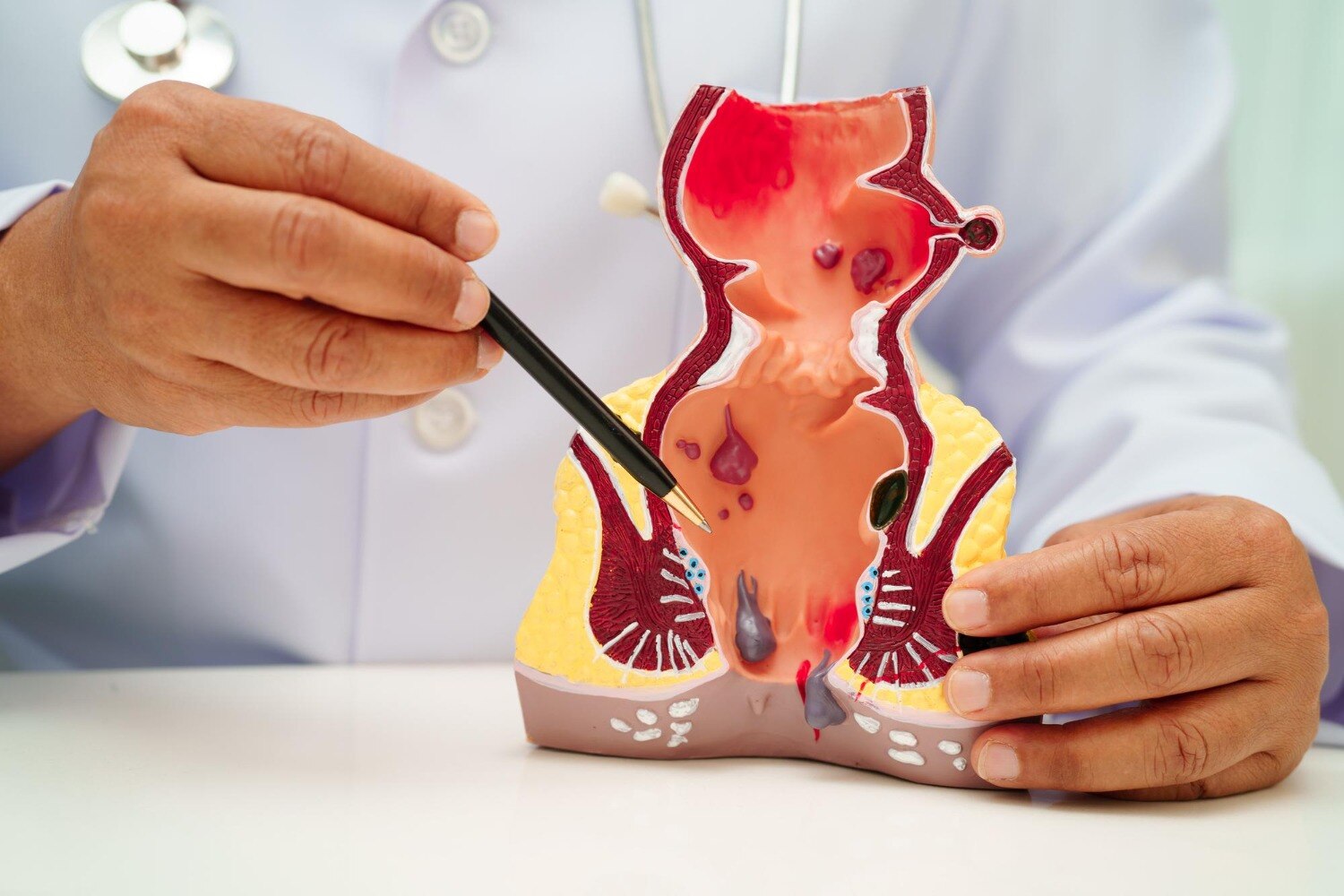
An established abscess needs examination because pus trapped under the skin rarely disappears with creams or tablets. The clinician inspects the skin, gently palpates for tenderness and fluctuance, and performs a digital rectal examination when tolerable. This assessment identifies infection that is superficial, deeper than the visible swelling, horseshoe-shaped, or linked to a fistula.
Incision and drainage makes an opening in the abscess and empties its pus-filled cavity. It does not treat haemorrhoids, and it cannot guarantee that a fistula will not develop. Antibiotics do not reliably remove the cavity, so they are not a substitute for drainage when drainage is indicated.
After drainage, antibiotics are reserved for surrounding cellulitis, systemic infection, significant immune suppression or another high-risk disease. Your clinician should decide this rather than you self-medicating.
Supportive care reduces pain and straining while the area heals:
- Use clinician-recommended pain relief.
- Take warm sitz baths and cleanse gently; do not scrub.
- Drink fluids and use stool-softening measures to prevent hard stools.
- Keep follow-up appointments, especially if drainage continues.
Never squeeze, cut or puncture the lump, wait for it to burst, or rely on haemorrhoid creams and suppositories. These actions can spread infection or delay proper treatment.
If you are searching for perianal abscess care with hemorroids in bangalore or a hemorroids and perianal abscess doctor, choose a service that can examine and drain an abscess promptly rather than treating every painful lump as haemorrhoids.
When imaging, anaesthesia and fistula follow-up are needed
Routine imaging is unnecessary for an obvious, superficial abscess that can be examined clearly. Further investigation changes management when the abscess is deep or occult, the examination is inconclusive, disease is recurrent or complex, or a fistula or Crohn disease is suspected.
| Option | What it adds | When it changes management |
|---|---|---|
| Clinical examination | Locates tenderness, fluctuance and visible drainage | Clear, accessible superficial abscess |
| MRI of the pelvis | Maps deep spaces, horseshoe extensions and fistula tracts | Recurrent, complex, occult or Crohn-related disease |
| Endoanal ultrasound | Shows the abscess and its relationship to the anal sphincters | Suspected fistula or unclear anatomy |
| CT | Detects deeper infection quickly when MRI is unavailable or urgent | Extensive infection or a patient who cannot undergo MRI |
A small, accessible abscess may be drained under local anaesthesia. A deep, large, recurrent, horseshoe or difficult-to-access abscess may require examination under anaesthesia and hospital-based drainage; the external lump does not reliably show the infection’s full extent.
An abscess is the acute infected cavity. A fistula is a persistent tunnel between the anal canal and skin. Return for ongoing drainage, repeated swelling or a non-healing opening after drainage.
Searching for a perianal abscess clinic in bangalore should lead you to ask how fistula follow-up is arranged: treatment must protect the anal sphincter, not assume repeated antibiotics or one procedure will solve every case.
How to choose timely perianal abscess care in Bangalore
Choose a service that can examine and drain an abscess promptly, not one that only offers routine haemorrhoid appointments. A perianal abscess clinic in Bangalore should provide a colorectal surgeon or experienced general surgeon and explain what happens if the infection is deep, recurrent or difficult to access.
| Question | What a satisfactory answer includes | Warning sign |
|---|---|---|
| Drainage | Same-day or prompt incision and drainage when indicated | Only creams, suppositories or delayed review |
| Anaesthesia | Local anaesthesia for a small accessible abscess; general anaesthesia or hospital drainage when needed | No plan for severe pain or deep disease |
| Imaging | Pelvic MRI or endoanal ultrasound for unclear, recurrent or complex disease | Imaging dismissed in every case |
| Medical risks | Clinician-led antibiotic decisions for diabetes, immune suppression, cellulitis or systemic infection | Advice to self-medicate |
| Follow-up | Written location of the abscess, fistula-risk discussion and a review appointment | Every painful lump labelled haemorrhoids |
Bharath Piles And Fistula Clinic may be one local option to assess, but verify its actual drainage, imaging, anaesthesia and follow-up arrangements before attending. Haemorrhoid-focused branding alone does not prove that a service manages deep anorectal sepsis.
Go to same-day hospital care for rapidly worsening pain, fever or chills, spreading redness, faintness, confusion, marked weakness, severe pain out of proportion to the lump, or inability to pass urine. Do not wait for a routine clinic slot.
Frequently asked questions
How can you tell a perianal abscess from a haemorrhoid?
An abscess often causes increasing constant pain, tenderness, swelling, warmth, pus or fever. Haemorrhoids more often cause bleeding, itching, prolapse or pain linked to a clot. A clinician must examine the lump because the conditions can overlap.
What should you check before seeking care for a suspected abscess?
Record when the lump and pain began, whether the swelling is growing, and whether you have fever, chills, pus, bleeding, diabetes, immune problems or previous fistula treatment. Do not squeeze or puncture it.
Why does an established perianal abscess need drainage?
An abscess is a pocket of pus that antibiotics alone may not empty. Examination and drainage relieve pressure, remove infected material and help the clinician assess its depth and possible connection to the anal canal.
When are imaging, anaesthesia and fistula follow-up needed?
Imaging helps when the abscess is deep, recurrent, difficult to locate or linked to a suspected fistula. Anaesthesia depends on the abscess location, extent and procedure. Follow-up matters because a persistent opening or repeated drainage can indicate a fistula.
Keywords