Sharp pain and bright-red blood during a bowel movement often point toward an anal fissure, while constant throbbing pain, a growing tender lump, redness, pus or fever raise concern about a perianal abscess. You will learn how to judge urgency, prepare for an examination, compare treatment settings and recognise when ongoing symptoms need reassessment.
Key takeaways
- Tearing pain with bowel movements points more toward fissure; throbbing pain and swelling suggest abscess.
- Record pain timing, swelling, bleeding, fever, drainage, constipation, and symptom changes before your visit.
- A suspected abscess needs prompt examination because drainage differs from fissure treatment.
- Seek reassessment for persistent pain, fever, swelling, drainage, or symptoms that return after treatment.
Fissure pain or abscess pain: which pattern fits your symptoms?
Sharp or tearing pain during and after defecation fits an anal fissure more closely, especially with a visible anal tear and a small amount of bright-red blood on toilet paper or the stool surface. Abscess pain is more often persistent or throbbing, with a tender swelling, warmth, redness, pus or fever.
| Pattern | Features that fit more closely | Important limitation |
|---|---|---|
| Anal fissure | Pain linked to bowel movements, visible tear, small bright-red bleed | A fissure can become infected |
| Perianal abscess | Constant pain, tender lump, warmth, redness, pus or fever | Not every abscess is obvious on the skin |
| Pilonidal disease | Painful midline natal-cleft lump near the tailbone | It is separate from the anal canal |
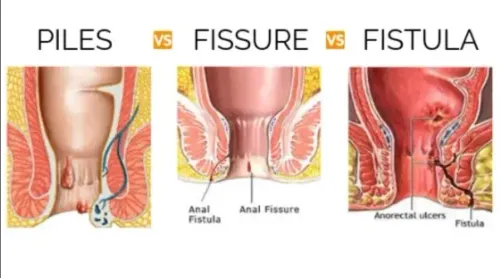
An infected fissure, thrombosed external haemorrhoid, fistula opening and other skin conditions can look similar. A painful lump in the middle of the natal cleft may be pilonidal disease rather than anorectal disease. Overlapping symptoms require examination, not self-diagnosis; an anal fissure clinic should distinguish these conditions.
Seek same-day perianal abscess evaluation in Bangalore if you have:
- Fever or chills
- Rapidly increasing swelling
- Severe constant pain or difficulty sitting
- Urinary difficulty
- Diabetes, immune suppression or pregnancy
A fever-free lump can still need urgent assessment. Do not assume fibre, creams or painkillers will treat a possible abscess.
What happens during an evaluation, and what should you record first?
A clinician needs to decide whether the lump is a superficial abscess, a fissure-related swelling, or deeper disease, and whether examination or imaging must go further. Record these details before your visit:
1. Note when symptoms began; whether pain follows bowel movements or remains constant; bleeding colour; whether the lump is growing; any discharge; your measured temperature; bowel frequency; constipation; previous abscesses; and recent antibiotic use.
2. Share your medical and medication history, including diabetes, inflammatory bowel disease, HIV, immune-suppressing medicines, pregnancy and previous anorectal surgery. These details can lower the threshold for urgent assessment or change treatment planning.
3. Expect inspection of the anus and surrounding skin for a tear, redness, warmth, swelling, discharge or an external opening. A clinician may offer a gentle digital rectal examination or anoscopy, but only when tolerable.
4. An acute fissure or abscess can make forced office examination inappropriate. If pain prevents adequate assessment or a deep abscess is suspected, examination under anaesthesia may be safer and more informative.
5. MRI of the pelvis, endoanal ultrasound or CT may be considered for a deep, recurrent or occult abscess, Crohn disease, atypical findings or suspected complex fistula. MRI is generally more useful for soft-tissue fistula mapping when available.
A perianal abscess evaluation in Bangalore should include this history, not just a skin check. A fissure abscess specialist should explain why imaging, drainage, anaesthesia or referral is needed rather than relying on a label.
Why suspected abscess treatment differs from fissure treatment
A lump and a tear need different treatment because an abscess is an infected collection, not simply irritated skin. A drainable perianal abscess generally needs prompt incision and drainage; antibiotics alone do not replace drainage. A clinician may add antibiotics for cellulitis, systemic illness, diabetes, immune suppression or another risk factor.
| Condition | Main problem | Usual treatment focus |
|---|---|---|
| Perianal abscess | Trapped infection in a cavity | Examination and prompt drainage; do not squeeze or puncture it |
| Anal fissure | Stool trauma and internal anal-sphincter spasm | Stool-softening, fluids, no straining, warm baths and prescribed topical treatment |
Spontaneous pus drainage does not prove that the cavity is empty. Do not delay assessment because the lump feels smaller. An anal fissure clinic or day-care fissure treatment pathway may address bowel habits and prescribe glyceryl trinitrate, diltiazem or nifedipine; glyceryl trinitrate commonly causes headache.
Persistent fissures may need botulinum toxin or lateral internal sphincterotomy after continence, previous anorectal surgery and sphincter risks are assessed.
Until reviewed, drink fluids, wash gently with water and use a warm sitz bath for comfort. Obtain clinician or label guidance before using laxatives, topical anaesthetics or painkillers. Do not use fibre, creams or pain relief as a substitute for examination when pain is constant or swelling is growing.
How to choose care in Bangalore when the diagnosis is uncertain
Choose based on urgency and complexity, not the sign over the door. An anal fissure clinic, a fissure and perianal abscess clinic in Bangalore, a general surgeon, and a colorectal specialist may all assess anorectal pain, while an emergency department is best equipped for immediate stabilisation and hospital-level monitoring.
| Option | Best fit | Check before attending |
|---|---|---|
| Anal fissure clinic | Typical fissure symptoms without systemic illness | Can it assess abscess or fistula and arrange referral? |
| Fissure and perianal abscess clinic in Bangalore | Fissure or superficial abscess needing focused assessment | Can it arrange imaging, drainage, anaesthesia and follow-up? |
| General surgeon | Abscess, uncertain diagnosis or surgery requiring broader expertise | Who provides after-hours care if the wound worsens? |
| Colorectal specialist | Recurrent abscess, complex fistula, deep or horseshoe disease | Can examination under anaesthesia or specialist imaging be arranged? |
| Hospital emergency department | Fever, spreading infection, severe uncontrolled pain, urinary difficulty or systemic illness | Is admission and monitoring available? |
A day care fissure treatment describes the setting and recovery plan, not proof that the case is minor. Ask whether the visit includes consultation, examination, preparation, local anaesthesia if used, observation and wound-care instructions; drainage can leave an open wound needing dressings and review. Ask if you need a driver or time away from work.
If considering Bharath Piles And Fistula Clinic, confirm clinic hours, emergency access, after-hours destination, follow-up, procedure and consultation estimates, payment methods and insurance paperwork. Ask whether the clinician is a fissure abscess specialist and can arrange escalation when needed; that phrase alone proves nothing.
What recovery requires and when persistent symptoms mean reassessment
After drainage or day-care fissure treatment, recovery depends on following the bowel-softening plan, keeping the area clean and attending review. Use prescribed laxatives or fibre, drink fluids, avoid straining, wash gently with water, and change dressings exactly as instructed. Do not squeeze a new lump or assume spontaneous drainage emptied an abscess.
- Ask before treatment: What is the diagnosis? Is drainage needed? What anaesthesia will be used? Is imaging or referral required?
- Confirm how often the wound will be reviewed, how dressings should be changed, and how much time off work is expected.
- Ask which recurrence signs require a call. Record pain, swelling, discharge, temperature, bleeding and urine output each day.
- Seek urgent care for worsening pain, fever, spreading redness, heavy bleeding, inability to pass urine, faintness or a wound that fails to improve.
- Treat repeated swelling at the same site, ongoing discharge or a non-healing external opening as a reason for reassessment.
An abscess can leave an anal fistula, an abnormal tract between the anal canal and skin. Repeated antibiotics do not correct that tract; examination and sometimes imaging are needed. A perianal abscess evaluation in Bangalore should explain this distinction and arrange escalation when necessary.
Trust evidence-based explanations tied to your diagnosis, not promises of a permanent solution. Recurrence and treatment depend on whether you have a fissure, abscess, fistula or another condition.
Frequently asked questions
How can you distinguish fissure pain from perianal abscess pain?
Fissure pain is usually sharp or tearing during and after defecation, with bright-red blood on toilet paper or the stool surface. Abscess pain is more often persistent or throbbing, with tender swelling, warmth, redness, pus, or fever.
What should you record before a fissure or abscess evaluation?
Record when pain begins, whether bowel movements trigger it, bleeding colour and amount, swelling, warmth, drainage, fever, constipation, and whether symptoms are worsening.
Why does suspected abscess treatment differ from fissure treatment?
An abscess is an infected collection that requires examination and may need drainage. Fissure care focuses on reducing trauma from stool and relaxing the anal sphincter, with treatment selected after assessment.
When should you seek reassessment after treatment?
Arrange reassessment for persistent or returning pain, fever, increasing swelling, pus or drainage, continued bleeding, or symptoms that fail to improve during the expected recovery period.
Keywords