Yes. Early symptoms can overlap, but the pattern of pain, skin changes and whole-body symptoms often points in different directions. By the end, you will know what you can observe safely, which warning signs need same-day assessment and why treatment for a fissure cannot substitute for drainage of an abscess.
Key takeaways
- Pain after bowel movements points toward fissure but does not rule out an abscess.
- Constant throbbing pain, swelling, redness, or fever needs prompt medical assessment.
- You cannot safely rule out a deep abscess by inspecting the skin at home.
- Same-day care matters when pain worsens or infection signs appear.
Why a Perianal Abscess Can Look Like a Fissure at First
Severe anal pain after a bowel movement does not identify the cause. A fissure is a linear tear in the anal lining, so passing stool can produce sharp, cutting or glass-like pain followed by burning that lasts minutes or hours.
A perianal abscess is a pus-filled infection beside the anus, but early pain can also feel deep and severe during defecation.
Fissure | Abscess Pain pattern | Sharp pain during stool passage, followed by burning or spasm | Constant, throbbing pain that worsens with sitting, walking, coughing or movement Local signs | A small tear, sometimes with bright-red blood on toilet paper | Tender swelling, warmth, redness or pus; a small deep abscess may show none What drives the pain | Internal anal-sphincter spasm keeps the tear painful | Infection and pressure build inside surrounding tissue
That overlap explains how a perianal abscess mistaken for fissure can go unnoticed. The conditions can also coexist, so finding a fissure does not rule out an abscess when pain is constant, unusually severe, progressively worsening or accompanied by fever or swelling.
The distinction matters because a fissure often receives measures that relax the sphincter and soften stools, while an abscess usually needs drainage. Antibiotics alone do not reliably empty the pus-filled cavity. Seek prompt in-person assessment if the pain is worsening or you develop fever, spreading redness, faintness or immune suppression.
Pain Timing and Physical Signs: Fissure or Abscess?
Sharp, tearing or “glass-like” pain during a bowel movement, followed by burning that lasts minutes to hours, makes a fissure more likely. Constant, throbbing pain that worsens while sitting, walking, coughing or moving points more strongly to an abscess.
| Finding | Fissure more likely | Abscess more likely |
|---|---|---|
| Pain timing | Starts with stool passage and continues afterward | Persists between bowel movements and progressively worsens |
| Visible signs | Bright-red blood on toilet paper; the tear may be hidden inside the canal | Tender lump, swelling, warmth, redness or pus |
| General symptoms | Usually no fever or chills | Fever, chills or feeling unwell support infection |
| Touch or movement | Pain is concentrated at the anal opening during examination | Pressure, sitting and movement intensify the pain |
These fissure and abscess symptoms overlap, so the pattern is a clue rather than a diagnosis. A small or early abscess can cause localized pain without pus, redness or a visible lump. A deeper abscess can cause deep rectal or pelvic pain with little skin change, particularly in people with diabetes or reduced immunity.
Treat painful swelling, pus, fever, rapidly increasing pain or difficulty passing urine as a reason for prompt examination. Do not squeeze, puncture or drain it yourself. If you cannot tell whether the problem is a perianal abscess or fissure, arrange an in-person assessment.
What You Can Check at Home—and What You Cannot Rule Out
At home, you can inspect the skin and track pain, but a normal-looking opening cannot rule out an abscess. Use a mirror after gently washing; do not insert anything into the anus.
| Clue | What it suggests | What it cannot prove |
|---|---|---|
| Tender lump or swelling | A superficial abscess is more likely | No lump does not exclude a deeper abscess |
| Redness, warmth or pus | Infection is more likely | Their absence does not make an abscess safe to dismiss |
| Pain that throbs or persists while sitting or walking | An abscess deserves assessment | Pain alone cannot distinguish it from a severe fissure |
| Sharp pain during or after stool passage | A fissure is more likely | A fissure and abscess can occur together |
Small or early abscesses can cause localized pain before redness, swelling or drainage appears. Deep intersphincteric, supralevator or ischiorectal abscesses may produce deep rectal or pelvic pain with little skin change. Older adults and people with diabetes or weakened immunity can also show fewer inflammatory signs.
Arrange a medical examination if pain remains constant, worsens, or returns after pus drains. Rupture can briefly relieve pressure without clearing the cavity; ongoing drainage, recurrent swelling or a small opening near the anus can indicate a fistula. A clinician may need a digital rectal examination and, for a suspected deep abscess, MRI or CT.
Do not squeeze, puncture or attempt drainage yourself.
When Painful Anal Symptoms Need Same-Day Assessment
Waiting for fissure treatment becomes unsafe when pain is constant or rapidly worsening, rather than limited to bowel movements, especially with a tender lump, swelling, warmth, redness, pus, fever or difficulty passing urine.
These signs point to infection or pressure in tissue around the anus, which needs examination instead of a trial of creams, fibre and warm baths.
| Fissure | Cutting or burning pain during and after stool passage; bright-red blood on toilet paper | Pain follows bowel movements and settles between them |
|---|---|---|
| Abscess | Constant, throbbing pain that worsens when sitting or walking; swelling, warmth, redness or pus may occur | Pain persists, escalates or accompanies fever and urinary difficulty |
Seek same-day medical assessment if you have:
- Fever, chills or feeling markedly unwell
- A painful anal lump or rapidly increasing swelling
- Pus, spreading redness or severe tenderness
- Pain that prevents sitting, walking or sleeping
- Difficulty passing urine
- Diabetes, immunosuppression or another condition that weakens infection defenses
Do not squeeze, puncture or attempt to drain the area yourself. That can push infection into deeper tissue and injure the anal canal.
An abscess can burst and release pus, producing sudden relief, but the infection may not be gone. The cavity can remain, refill or leave a small channel connecting to the skin. Persistent drainage, recurrent swelling or an opening near the anus can signal an anal fistula, so arrange follow-up even after the pain improves.
How Clinicians Confirm the Diagnosis and Choose Treatment
Diagnosis starts with inspection of the skin and anal opening. The clinician looks for a fissure, swelling, pus, redness or an external opening, then performs a gentle digital rectal examination when tolerable. Deep pain without a lump may require MRI or CT; examination under anaesthesia is reserved for difficult or very painful cases.
| Diagnosis | Examination clues | Usual treatment |
|---|---|---|
| Fissure | Linear tear, often at the anal opening; pain linked to bowel movements | Stool-softening measures, prescribed topical medicine and pain control; persistent fissures may need a procedure |
| Superficial abscess | Localised tender swelling, warmth, redness or pus | Prompt incision and drainage; antibiotics are added for cellulitis, fever, diabetes, immunosuppression or other complications |
| Deep abscess | Severe deep rectal or pelvic pain with little skin change; imaging may show the collection | Urgent drainage planned according to its location, sometimes in an operating theatre |
Choose perianal abscess care in Bangalore by asking who will examine you, whether drainage is available promptly, and how they investigate a deep or recurrent abscess. Do not choose solely on a promise of non-operative treatment: an abscess often needs drainage.
Bharath Piles And Fistula Clinic can be one option to question about examination, drainage arrangements and follow-up, especially if symptoms resemble a fissure but keep worsening.
Go to an emergency department for fever, spreading redness, faintness, rapidly increasing pain, difficulty passing urine or immunosuppression. Never squeeze or puncture the area yourself.
Related items
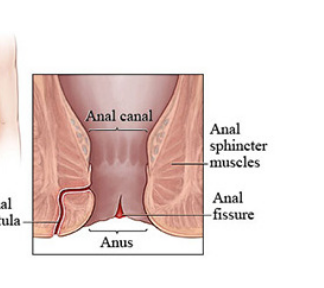 | Treatment for fissures typically involves a combination of medical and lifestyle interventions aimed at reducing pain, promoting healing, and... View service → |
 | An anal fistula may be a tunnel that runs from within the arse -- the outlet your body uses to urge obviate solid waste -- to somewhere within the... View product → |
Frequently asked questions
Can a perianal abscess be mistaken for a fissure?
Yes. Both can cause severe anal pain, but an abscess is more likely to cause constant throbbing pain, swelling, redness, warmth, or fever.
How can you tell the difference between a fissure and an abscess?
A fissure causes sharp, cutting pain during bowel movements followed by burning. An abscess often causes persistent worsening pain and a tender lump, although a deep abscess may have no visible lump.
Can you check for a perianal abscess at home?
You can look for swelling, redness, drainage, or a tender lump, but a home check cannot rule out an abscess deeper beneath the skin.
When does painful anal swelling need same-day assessment?
Seek same-day assessment for worsening constant pain, a painful lump, fever, chills, spreading redness, pus, difficulty sitting, or difficulty passing urine.
How do clinicians confirm whether it is a fissure or abscess?
Clinicians use your symptom pattern and an examination. They assess the anal skin, check for tenderness or swelling, and order imaging when a deep or complex abscess is suspected.
Related product
 | A pilonidal sinus (PNS) could be a tiny hole or tunnel within the skin. View product → |
Keywords