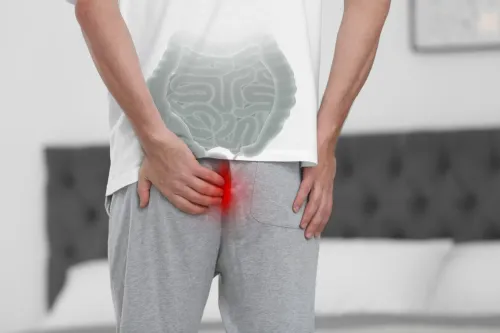
Constant anal pain, a tender swelling, pus, fever or difficulty urinating needs prompt clinical assessment rather than home treatment. You will learn how a Bangalore clinic separates an abscess from a fistula and other causes, what happens from examination through drainage or fistula treatment, and which questions help you choose safe follow-up care.
Key takeaways
- Seek same-day assessment for constant pain, fever, pus, redness or difficulty urinating.
- Drainage treats the abscess; antibiotics alone rarely empty a pus-filled cavity.
- Ask how the clinic will identify and treat a fistula after drainage.
- Confirm wound-care instructions, review timing, emergency contacts and total follow-up needs.
When anal pain needs same-day assessment
Worsening, constant anal pain needs same-day assessment, especially when sitting or passing stool becomes difficult. A tender lump, spreading redness, pus, fever, chills, difficulty urinating or feeling acutely unwell can indicate a perianal abscess that needs prompt drainage; antibiotics alone rarely clear a pus-filled cavity.
Seek urgent medical care if you have:
- A rapidly enlarging or intensely painful swelling beside the anus.
- Fever, shaking chills, weakness, confusion or faintness.
- Redness spreading into the buttock or perineum.
- Inability to urinate, persistent vomiting or severe pain out of proportion to the visible swelling.
- Diabetes, reduced immunity or recent anorectal surgery alongside new pain or fever.
Do not squeeze the swelling or delay because it has started draining; partial drainage can leave infected pockets behind. Fistula and perianal abscess care steps at a clinic in Bangalore should begin with examination and an anaesthetic plan, followed by incision and drainage when an abscess is confirmed.
A small, stable lump without fever still deserves a prompt appointment, but it may not require emergency assessment.
What happens at the first consultation
The first consultation begins with questions about pain, swelling, discharge, bleeding and bowel movements. Tell the clinician about previous abscess drainage, repeated discharge, Crohn’s disease or other bowel disease, continence changes and anorectal operations; these details affect the safest treatment choice.
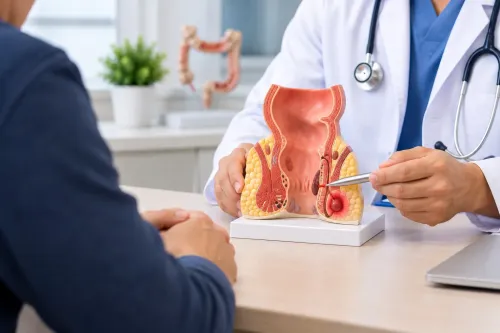
Inspection of the perianal skin looks for redness, a tender lump, pus, a small external opening, scarring or several openings. The clinician may perform a digital rectal examination, followed by anoscopy or proctoscopy when internal disease needs inspection. Severe pain can make an examination under anaesthesia safer and more accurate.
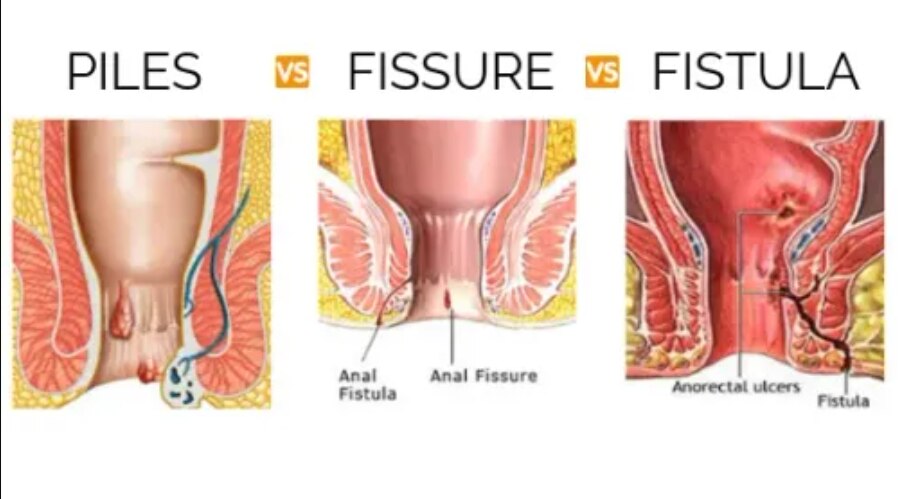
| Condition | Findings that point toward it | What the clinician checks |
|---|---|---|
| Perianal abscess | Constant pain, tender swelling, warmth, redness or pus | Whether a fluctuant collection needs drainage |
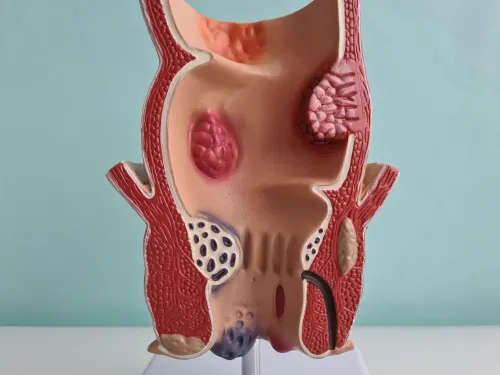
| Anal fistula | Recurrent discharge or an external opening after an abscess | Whether a tract leads to the anal canal |
| Anal fissure | Sharp pain during or after stool, often with a visible tear | The fissure position and anal-muscle spasm |
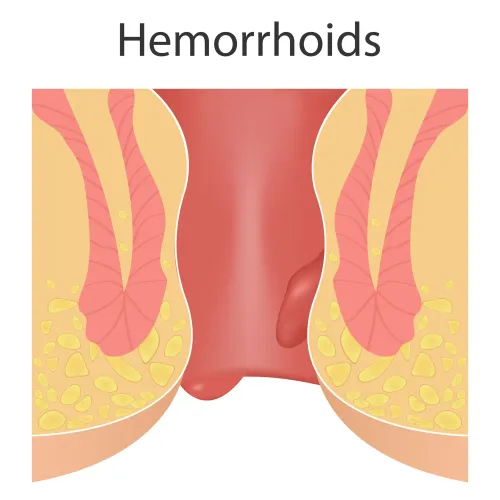
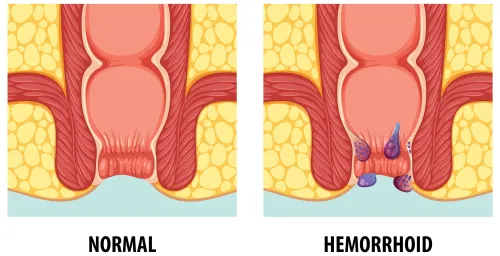
| Haemorrhoid | Bright-red bleeding, itching or tissue that prolapses | Internal or external haemorrhoidal tissue |
| Infected skin lesion | Infection centred on a hair follicle or skin cyst | Whether it connects to the anus or remains superficial |
A straightforward fistula can often be mapped clinically. MRI pelvis or endoanal ultrasound helps when the tract is recurrent, complex, horseshoe-shaped, has multiple openings or remains unclear. This examination-based fistula care process in Bangalore should identify the condition before treatment is chosen.
The perianal abscess treatment sequence
A pus-filled perianal abscess needs prompt incision and drainage; antibiotics alone usually cannot clear the closed cavity. The perianal abscess treatment steps are:
1. The clinician confirms the swelling, estimates its depth and extent, and checks for fever, spreading redness, diabetes, immune suppression and other factors that affect safety.
2. Anaesthesia is selected according to pain, abscess size and depth, and your health. A small, accessible abscess may be drained under local anaesthesia; a deep or extensive one may require regional or general anaesthesia.
3. The surgeon makes an incision to release the pus, then breaks internal pockets, called loculations, so no trapped collection remains. The cavity is irrigated when appropriate.
4. The wound is left able to drain. Routine packing is not required in every case, and prolonged packing can increase pain, so ask exactly whether gauze is needed, how often to change it and what to do after bowel movements.
5. You receive instructions for pain relief, washing, dressings and review. Recurring swelling, fever, worsening pain or renewed pus needs earlier assessment.
Antibiotics are added when drainage alone is not enough or infection has spread. Stronger reasons include surrounding cellulitis, fever or other systemic illness, diabetes, immunosuppression, another impaired-host condition, or incomplete source control. The clinician chooses the drug and duration after examining you and considering local resistance patterns; do not self-start leftover antibiotics.
Finding and treating a fistula after drainage
Drainage does not prove that a fistula exists. After the acute wound begins to settle, persistent or recurrent pus, bleeding, or a small opening near the anus raises suspicion for a tract connecting the anal canal or rectum to the skin. The clinician confirms this through inspection, digital rectal examination, and often anoscopy or proctoscopy.
A simple tract may be mapped during an examination under anaesthesia. MRI of the pelvis or endoanal ultrasound helps when the tract is deep, recurrent, branching, or hidden by pain and swelling. Not every drained abscess develops a fistula, so an operation is not justified from the abscess history alone.
The treatment plan must protect continence before it closes the external opening. The clinician should record your baseline control of gas and stool, then assess these risk factors:
- Previous anal surgery or an obstetric sphincter injury
- A high or branching tract
- Crohn’s disease or another inflammatory bowel condition
- An anterior fistula in a woman
A low, uncomplicated tract that crosses little sphincter muscle may suit fistulotomy, which opens the tract to heal from the base. A high or complex tract needs a sphincter-sparing approach, such as a draining seton followed by another procedure, rather than cutting through muscle.
Persistent non-healing wounds or multiple tracts require assessment for Crohn’s disease; medical treatment and drainage may need coordination instead of fistulotomy alone.
Discharge, wound care and follow-up after day care
Expect soreness, light bleeding or drainage after abscess drainage or fistula treatment. Keep the area clean with water, pat it dry, use the dressing instructed by the clinician, and take prescribed pain relief. Do not insert gauze or continue packing unless the surgeon specifically directs it; prolonged packing can increase pain.
A fistula day care clinic should give you written instructions, a contact number and a planned review. The review checks healing, ongoing discharge, continence and whether another procedure or imaging is needed.
Seek same-day review if you develop:
- Fever, chills or increasing weakness
- Worsening constant pain, swelling or spreading redness
- Heavy bleeding, foul-smelling discharge or pus that is increasing
- Difficulty passing urine
- Vomiting, dizziness or inability to manage fluids and medicines
Ask for hospital-based care rather than routine discharge when infection is uncontrolled, you need observation, anaesthesia is difficult, or conditions such as diabetes or immune suppression raise risk. Complex or recurrent fistulas, multiple tracts and non-healing wounds also need specialist follow-up rather than assuming the day-care procedure has solved the problem.
Questions to ask when choosing a Bangalore clinic
Before booking fistula treatment near me in Bangalore, ask who will examine you, how the tract will be mapped, and what happens if the case is complex. A low price or day-care label does not prove that the proposed operation is suitable.
- Does the clinician routinely treat recurrent, high or multiple-tract fistulas?
- Will they document continence and risks from prior anal surgery, obstetric sphincter injury, Crohn’s disease or female anterior fistula anatomy?
- Is MRI pelvis arranged when examination cannot define the tract?
- Who provides anaesthesia, and where will you go for urgent review or admission?
Check whether Bharath Piles And Fistula Clinic answers these questions clearly before you consent.
| Clinic claim | Verify | Warning |
|---|---|---|
| Day care | Hospital backup and admission criteria | No escalation plan |
| Sphincter-saving care | Named alternatives and trade-offs | One procedure promised for every case |
| Low cost | Written inclusions, follow-up and anaesthesia | Price excludes essentials |
Frequently asked questions
When does anal pain need same-day assessment?
Seek same-day assessment for worsening constant pain, a tender lump, spreading redness, pus, fever, chills, difficulty urinating or feeling acutely unwell.
What happens at the first consultation?
The clinician reviews your symptoms and medical history, examines the area and decides whether you need urgent drainage, further testing or another treatment.
What are the main perianal abscess treatment steps?
Assessment is followed by numbing or anaesthesia, opening and draining the pus cavity, cleaning the area, giving wound-care instructions and arranging follow-up.
How is a fistula treated after an abscess is drained?
After healing begins, the clinician checks for a persistent drainage opening or tract and discusses treatment based on its location, complexity and involvement of the anal sphincter.
What should you ask a Bangalore clinic before choosing it?
Ask who performs the procedure, how abscess drainage and fistula assessment are handled, what aftercare includes, when review occurs and where to get help after hours.
Keywords